 Safety
Every major wave of technology has brought incredible progress—and unintended consequences. Social media, smartphones, app stores, and AI systems have transformed modern life. But they have also created a digital environment where children face risks no generation has ever seen.
Parents can feel it. More than 90% of U.S. parents now say online safety is their number one child-safety concern. And the data is clear: the digital world, as currently designed, is not built for kids.
Research continues to reinforce what families already know. The American Academy of Pediatrics recently found that preteen smartphone use is associated with higher rates of depression, obesity, and sleep disruption.
Teens spend more than four–and–a–half hours a day on social media, with those using it more than three hours daily facing double the risk of depression and anxiety. Suicide rates among young people have risen 62% since 2007.
At the same time, exposure to pornography has become almost unavoidable. Nearly three-quarters of teenagers say they’ve seen online pornography, with the average age of first exposure now just 12 years old—many even younger. More than half have encountered violent content, including depictions of sexual assault. These early exposures have long-term impacts on development, relationships, and emotional health.
All the while, platforms continue to deploy engagement-driven algorithms that surface harmful content, allow adults to contact minors, and keep children online longer than they intend.
This is not an accident.
It is a design failure—and a market failure.
For years, the burden of child online safety has been placed almost entirely on parents:
But this is an unrealistic expectation even for well-resourced families. For single parents, working parents, or households with multiple children, it is impossible.
The uncomfortable truth is this:
You cannot parent your way out of a design problem.
Platforms created the risks. Their algorithms fuel the problems. Their business models reward engagement, not safety.
Parents are being asked to defeat systems designed by billion-dollar companies.
That is why the model must shift.
Safety has to move upstream—into the technology itself.
ChildSafe.dev exists because the industry has lacked one critical layer:
an accessible, developer-ready infrastructure for child safety.
Instead of expecting every platform to invent safety tools from scratch—or expecting parents to solve problems technology created—ChildSafe.dev provides the technical layer that should have existed from the beginning.
RoseShield is a safety engine designed to make any online experience safer for minors by embedding protection directly into apps, games, social platforms, and AI systems. It doesn’t rely on what parents know or what platforms choose to prioritize. It protects children quietly, continuously, and at scale.
RoseShield can:
Most importantly, RoseShield is:
This is the missing ingredient the internet has needed for 20 years.
Policy alone cannot fix this.
Parents alone cannot fix this.
Platform moderation alone cannot fix this.
But technology designed for child safety at the foundation layer can fix this—and RoseShield was built for exactly that purpose.
Several bills being considered by Congress take important steps toward improving child safety:
Together, these policies create necessary guardrails.
But without technology like RoseShield built into platforms, the laws are mostly symbolic.
Laws can require safety.
Only technology can deliver it.
A truly safe digital world for children requires three things:
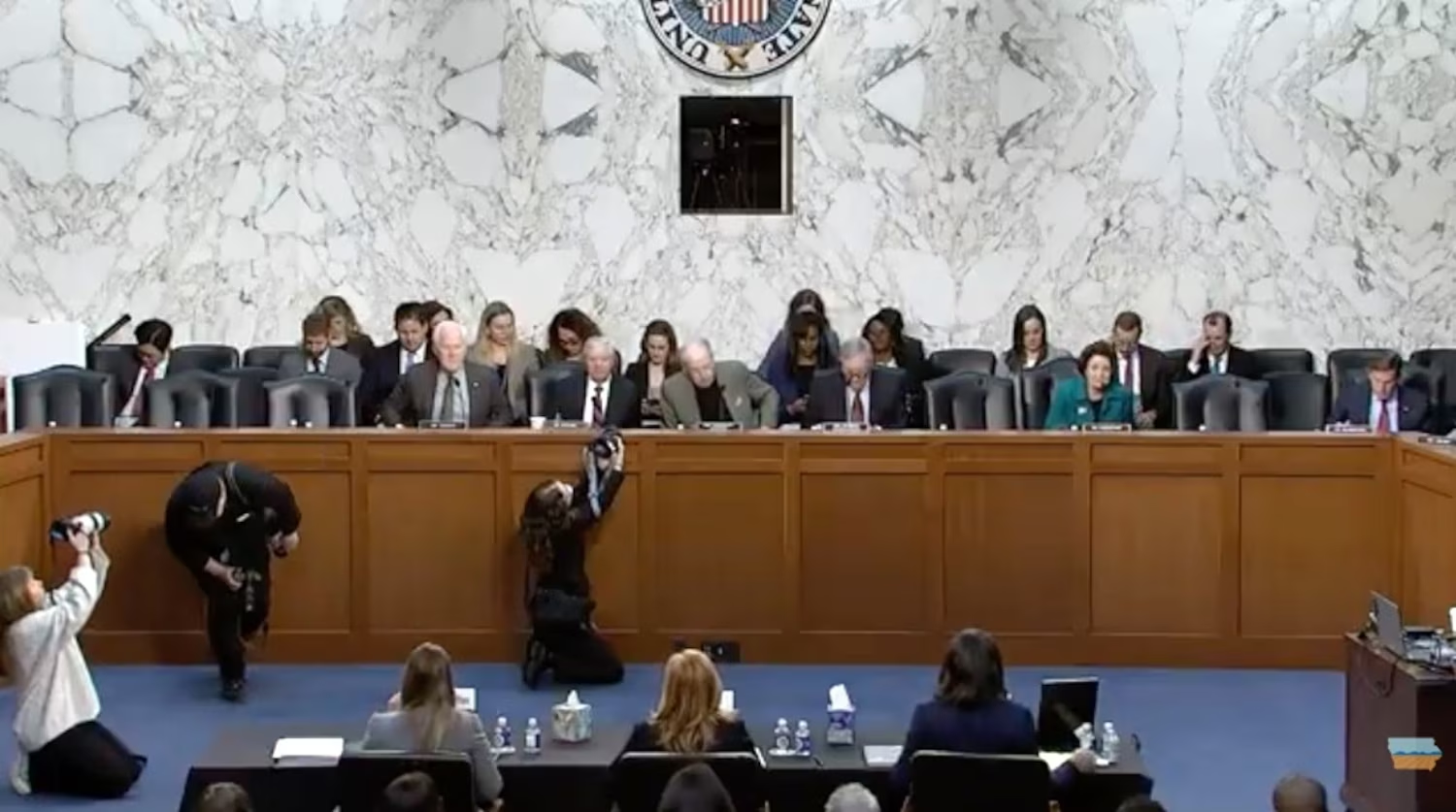
Congress is advancing long-overdue legislation.
They can no longer treat child safety as an afterthought.
This is where ChildSafe.dev and RoseShield provide the essential infrastructure.
When these three pieces work together, the digital environment shifts from reactive to protective—from “try to stop the harm after it happens” to “prevent the harm before it begins.”
We have enough data. We have enough evidence. We have enough grieving families.
The digital world wasn’t built for children.
But with the right technology, it can be rebuilt to protect them.
RoseShield is the breakthrough that makes that future possible.
By embedding safety directly into the fabric of digital platforms, we can finally give parents, lawmakers, and companies the tools to protect kids—not just in theory, but in practice.
If we act urgently, intelligently, and collaboratively, this generation could be the first to grow up online with real safeguards.
And that is a future well worth building.



Privacy first child protection technology. Keeping children safe online without compromising privacy.


© 2025 ChildSafe.dev · Carlo Peaas Inc. All rights reserved.
Built with privacy-first, PII-free child protection.


